
Recuperación tras una lesión en la construcción: Cómo regresar de forma segura a trabajos pesados en Illinois
Job-Specific Rehab for Construction Workers: Returning to the Site Safely
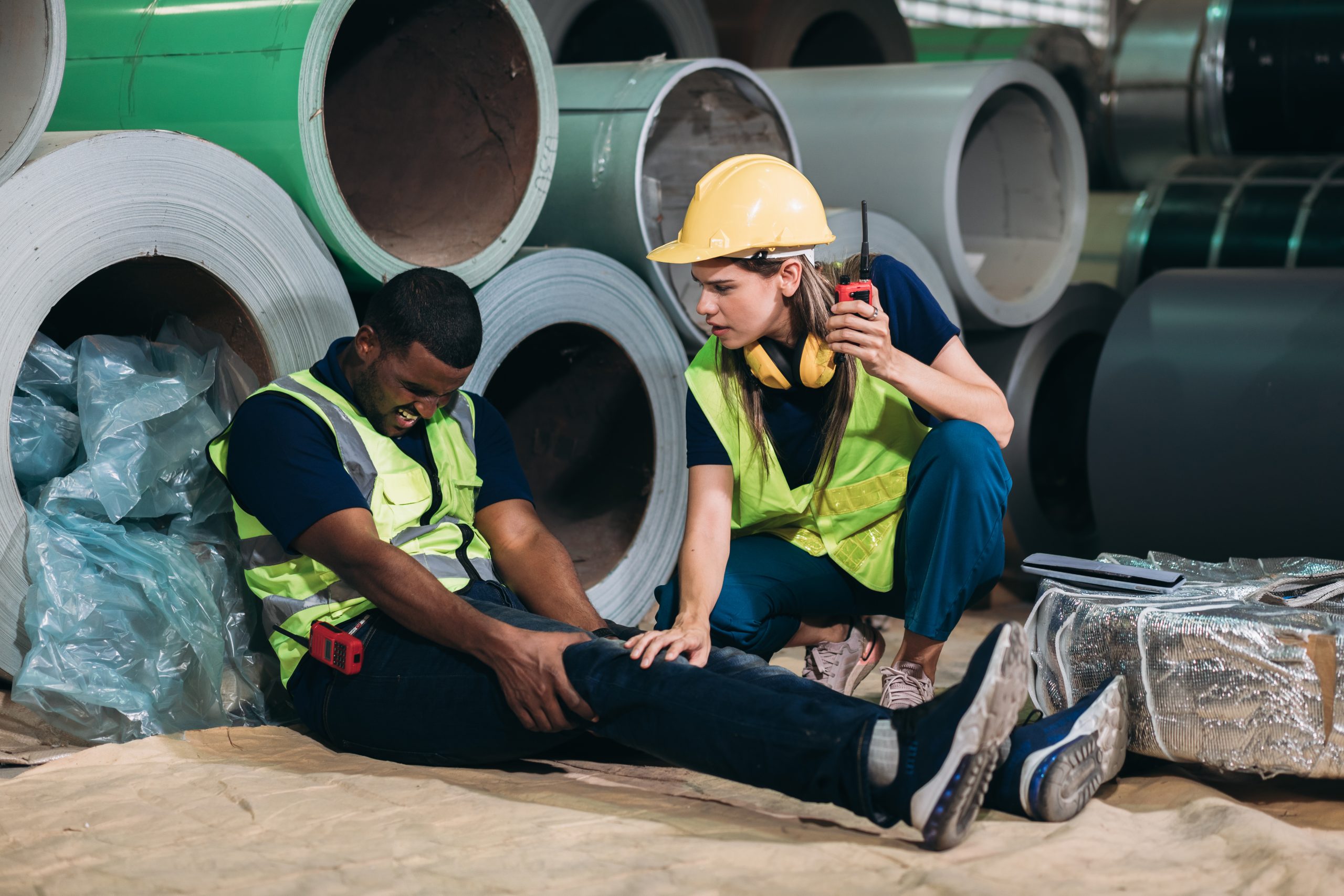
Construction work is one of the most physically demanding occupations in Illinois. From commercial carpenters and drywallers to road construction laborers and concrete workers, tradespeople are the industrial athletes of our workforce. However, unlike professional sports, there is no offseason on a construction site.
When a workplace injury occurs, the physical toll is only part of the problem. You are also dealing with lost wages, complex workers’ compensation claims, and the nagging question of whether your body will ever be strong enough to lift heavy materials, climb scaffolding, or handle power tools safely again.
En La Clínica SC, our primary focus is helping injured employees achieve a complete work-related injury recovery. Standard physical therapy, which often relies on light weights and general stretching—is rarely enough to prepare a tradesperson for the heavy-duty realities of a job site. That is why we specialize in job-specific industrial rehabilitation designed to rebuild your strength and functional capacity, ensuring you do not suffer a costly re-injury the moment you step back on the clock.
Why Standard Physical Therapy Falls Short for Construction Injuries
If your daily job requires you to lift 80-pound concrete bags, climb ladders with a tool belt, or hold heavy drywall sheets overhead, a basic clinic routine of light resistance bands and stationary biking will not prepare you for full duty.
Traditional physical therapy is excellent for reducing acute pain and restoring basic mobility. However, returning to a physically intense construction environment requires a specialized transition program.
Without targeted, job-specific strength training, returning to the site too early often leads to immediate re-injury, turning a temporary muscle strain into a permanent, career-ending chronic condition.
The Power of Specialized Industrial Rehabilitation
To solve this gap, our clinical team implements comprehensive Industrial Rehabilitation services that act as a bridge. This specialized therapy progresses from pain relief to active Work Conditioning, a structured program that uses real-world simulator equipment to mimic your exact daily physical movements under medical supervision.
Common Construction Injuries Treated at La Clinica S.C.
Construction sites present a wide array of physical hazards. Over our years of serving the Chicagoland area, we have helped thousands of workers recover from severe musculoskeletal trauma, including:
1. Lower Back Strains and Disc Injuries
Constant bending, heavy lifting, and twisting under load place immense pressure on the lumbar spine. This frequently results in severe lower back muscle sprains, bulging or herniated discs, and radiating sciatic nerve pain.
2. Shoulder Rotator Cuff Tears and Impingement
Electricians, painters, and drywallers perform repetitive overhead tasks for hours at a time. This continuous elevation leads to painful shoulder impingement, bursitis, and micro-tearing of the rotator cuff tendons.
3. Knee and Ankle Trauma
Whether from slipping on uneven ground, navigating muddy job sites, or jumping down from equipment beds, the lower joints absorb massive amounts of sudden impact force, leading to meniscus tears, ligament sprains (ACL/MCL), and severe ankle fractures.
4. Repetitive Stress Injuries (RSIs)
Using vibrating hand tools, executing repetitive hammering motions, or constantly grasping heavy machinery can gradually compress nerves and inflame tendon sheaths, leading to Carpal Tunnel Syndrome or debilitating elbow tendonitis.
The Path to Recovery: Our 4-Stage Rehabilitation Blueprint
At La Clinica S.C., we customize your treatment plan based on your specific trade. Our comprehensive recovery program features four distinct clinical stages:
Stage 1: Pain Reduction and Chiropractic Care
We begin by calming active tissue inflammation and correcting joint misalignments. Our multidisciplinary approach combines professional chiropractic care with soft-tissue therapies (such as myofascial release and localized physical modalities) to restore your baseline range of motion and relieve nerve compression.
Stage 2: Core and Functional Power Training
A stable spine is a construction worker’s primary defense against heavy lifting injuries. We transition you into targeted ejercicios de recuperacion de lesiones laborales designed to strengthen the deep core musculature, stabilize the pelvis, and rebuild your body’s functional power.
Stage 3: Simulated Job-Site Exercises (Work Conditioning)
During this phase, our clinic becomes your simulated job site.
-
For Carpenters & Drywallers: We utilize weighted pulleys and resistance trainers to mimic the exact arm and shoulder angles required to install heavy panels overhead.
-
For Masonry & Concrete Workers: We train your lifting mechanics using weighted blocks, focusing on proper hip-hinging techniques to spare your lower back.
-
For Ironworkers & Electricians: We practice progressive weight-bearing, step-ups, and balance drills on uneven surfaces to prepare you for navigating scaffolding, ladders, and exposed steel.
Stage 4: The Functional Capacity Evaluation (FCE)
Before you are officially cleared to return to work, we conduct an objective, data-driven Functional Capacity Evaluation. This rigorous physical assessment measures your precise lifting limits, push/pull strength, and cardiovascular endurance to guarantee you can meet the heavy-duty physical demands of your trade without compromise.
Knowing Your Rights: Illinois Workers’ Compensation and Rehab
Bajo el Ley de Compensación Laboral de Illinois, injured construction workers have robust legal protections. Navigating this process can be overwhelming, but understanding these fundamental rights is crucial to your recovery:
The “Two-Doctor Rule” in Illinois
Many employers try to push injured workers toward “company-approved” industrial clinics. However, Illinois law explicitly states that you have the right to choose your own medical providers. You can choose up to two primary treating doctors of your own choice, and your employer’s workers’ compensation insurance is legally required to cover 100% of the approved treatment costs.
What is Vocational Rehabilitation?
If a highly severe workplace injury prevents you from ever returning to your previous heavy-duty trade, you may qualify for vocational rehabilitation. In Illinois, this program provides professional retraining, job placement assistance, and educational courses paid for by the workers’ comp insurer, helping you safely transition into a different, physically sustainable career path.
People Also Ask: Construction Rehab FAQs
What qualifies you for vocational rehabilitation?
In Illinois, you qualify for vocational rehabilitation if your workplace injury has resulted in a permanent physical restriction or disability that legally prevents you from returning to your original construction trade. If your treating physician determines you cannot perform the heavy physical tasks of your previous job even after completing work conditioning, the insurance provider must cover the cost of retraining you for a new, light-duty occupation.
What is the riskiest job in construction?
While all construction roles carry inherent hazards, road construction workers, roofers, and structural ironworkers consistently face the highest rates of severe, nonfatal injuries. Road construction workers are particularly vulnerable to high-impact vehicular collisions, while roofers and ironworkers face substantial gravity-related risks, with falls, slips, and trips being the leading cause of major workplace trauma.
What is the vocational rehabilitation program in Illinois?
The vocational rehabilitation program in Illinois is a legally mandated benefit under the state’s workers’ compensation system. It is designed to assist injured workers who have sustained permanent, life-altering physical limitations. The program covers the costs of vocational counseling, resume development, job search assistance, and formal retraining or schooling so you can find gainful, safe employment in another industry.
How to avoid back pain when working construction?
Preventing lower back injuries on a busy job site requires proper movement hygiene:
-
Lift in the “Power Zone”: Always keep heavy materials close to your body, holding them between your mid-thigh and mid-chest.
-
Avoid the “Bend and Twist”: Never twist your torso while lifting or carrying a heavy load; instead, pivot your entire body with your feet.
-
Engage Your Core: Tighten your abdominal muscles before performing any push, pull, or lift to create a natural brace for your spine.
-
Take Micro-Breaks: Perform gentle, opposite-direction stretches (like standing back extensions) throughout your shift to relieve cumulative disc compression.
Take the First Step Toward Your Recovery
Do not rush back to a demanding construction site while still in pain. Let our dedicated clinical experts guide you through a structured, job-specific rehabilitation program that protects both your health and your livelihood.
With convenient, state-of-the-art facilities located throughout Chicagoland, our compassionate, bilingual staff is ready to help you recover.
Contacte hoy mismo con La Clinica SC:
-
Línea principal de programación: (773) 278-9525
-
Hablamos Español: Bilingual clinical staff at all locations.
-
Ubicaciones convenientes: Cicero, Chicago Sur, Chicago Norte, Little Village, Melrose Park, Waukegan, Aurora, Blue Island y Elgin.
Call us today or visit one of our clinics to schedule your consultation. No prior employer pre-approval is required to begin your recovery journey with us!


 Spanish
  English