

Physical Therapy for Hand Injuries: 7 Exercises to Help You Heal
When our hands are healthy, we barely notice all the tasks they perform – from typing and cooking to driving and sports. But an injury to your hand can quickly remind you how vital it is in daily life. Whether it’s a work accident, a car crash, or a sports mishap, hand injuries can make even simple actions painful or impossible. The good news is that with proper care – especially physical therapy – you can recover strength and function in your hand and get back to your normal routine.
In this blog, we’ll explore how physical therapy helps hand injuries and share 7 simple exercises you can do to aid your recovery. We’ll also answer common questions and explain how our team at La Clinica SC (your Chicago-area auto, sports & work injury clinic) can support you on the path to healing.
Are You Experiencing Any of These Hand Injury Symptoms?
Hand injuries come in many forms, but they often share similar symptoms. Do any of these sound familiar?
- Pain or soreness in your hand, wrist, or fingers (especially with movement or pressure).
- Stiffness and limited movement – difficulty bending or straightening your fingers.
- Swelling or bruising in the hand or fingers.
- Numbness or tingling (pins-and-needles feeling) in your fingers or palm.
- Weak grip strength, making it hard to hold objects or make a fist.
- Popping, clicking, or “catching” sensations in your fingers (for example, a finger getting stuck in a bent position).
- Visible injury like a misaligned joint, dislocation, or even a fracture/broken bone.
- Ongoing ache from arthritis that flares up during hand use.
If you’re experiencing any of these issues, you’re not alone – and you don’t have to “just live with it.” Hand and finger exercises can strengthen your hands, increase your range of motion, and even provide pain relief. In fact, therapeutic exercises are a proven way to improve hand function after injury by reducing stiffness and swelling and improving joint flexibility.
Have questions about your hand, wrist, or finger injury?
Contact La Clinica SC Physical Therapy and Injury Specialists to schedule a consultation with our experienced physical therapy and orthopedic team. We’re here to help you heal.
What Is Physical Therapy and How Can It Help a Hand Injury?
Physical therapy (PT) is a branch of rehabilitative healthcare that focuses on restoring movement and function to injured or painful areas of the body. In the context of a hand injury, the goal of PT is simple: help you regain the use of your hand, reduce pain, and prevent future problems. It’s a conservative treatment approach often recommended before considering more invasive options like surgery.
So, what does physical therapy for a hand injury actually involve? First, it usually starts with an evaluation by a doctor or physical therapist to understand your specific injury and needs. Then, a personalized therapy plan is created – there’s no one-size-fits-all. Your plan may include various techniques such as gentle stretches and range-of-motion exercises, strengthening exercises, and hands-on therapies to ease pain. The overall purpose is to restore mobility and strength while preventing long-term stiffness or weakness in your hand.
Common Physical Therapy Exercises for Hand Injury Recovery
One of the core components of hand rehabilitation is performing targeted exercises. These exercises may look simple, but they are powerful tools to help you heal. They work by gently stretching tight structures, strengthening weakened muscles, and improving coordination in your hand and fingers. Here are seven effective physical therapy exercises often recommended for hand injuries.
1. Finger Stretch
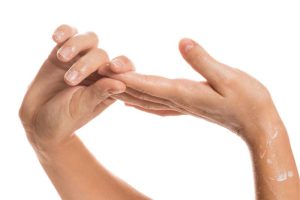
Purpose: Improve the flexibility of your fingers and reduce stiffness or pain. This stretch helps you regain the ability to fully straighten your fingers.
How to do it: Place your hand flat on a table or other surface, palm down. Slowly straighten your fingers out as flat against the surface as you can, without forcing any joints (don’t press down painfully). You should feel a gentle stretch along the tops of your fingers and hand. Hold the stretch for about 30 seconds, then relax. Repeat this stretch 4 times with each hand. Over time, you’ll notice your fingers can extend more comfortably.
2. Finger Lift
Purpose: Increase the range of motion and flexibility in your fingers, and strengthen the tendons that lift your fingers.
How to do it: Start with your hand resting flat on a table, palm down. One by one, slowly lift each finger off the table a few inches, then lower it back down. For example, lift your index finger while keeping the others flat, then put it down; next, lift your middle finger, and so on. Try to lift each finger individually (you can lift the thumb too). Don’t be surprised if some fingers are harder to lift than others – that’s normal. Repeat 8–10 lifts per finger on each hand. This exercise helps “wake up” the muscles that allow your fingers to extend.
3. Thumb Stretch
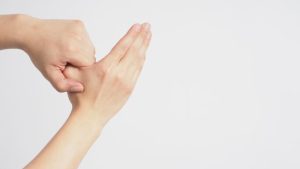
Purpose: Improve the flexibility and mobility of your thumb, which is crucial for gripping and pinching motions.
How to do it: Hold your hand up with all fingers straight. Gently bend your thumb inward across your palm, as if you’re trying to touch the base of your pinky finger. You should feel a stretch along the thumb and even the base of your hand. If you can’t reach all the way, just go as far as possible comfortably. Hold it for a couple of seconds, then return your thumb to the starting position.
Repeat this motion 10–15 times for each thumb. For an extra challenge, as your thumb is stretched across the palm, try to touch each fingertip to your thumb one at a time (forming an “OK” circle with each finger). This helps with overall hand coordination.
4. Claw Stretch
Purpose: Increase the range of motion in your finger joints and help with overall hand mobility. The “claw” position stretches the smaller joints in your fingers.
How to do it: Start with your hand open and fingers straight. Then bend your fingertips down so that the top two joints of your fingers curl and your hand forms a claw shape (your fingertips will be bending down toward the base of each finger, but your big knuckles – where the fingers meet the hand – remain straight). Try to get the tips of your fingers to touch your palm if you can.
Hold the claw position for 5 seconds, then straighten your fingers again. Repeat this exercise 10 times on each hand. It’s okay to use your other hand to gently assist if a finger isn’t bending easily. The claw stretch helps keep your finger joints limber.
5. Stress Ball Squeeze (Grip Strengthening)
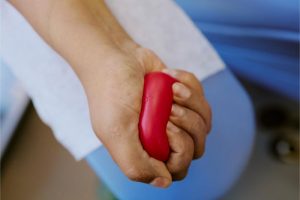
Purpose: Strengthen the muscles of your hand and forearm to improve your grip strength. This exercise is great for recovering from fractures or tendon injuries that left your hand weak.
How to do it: Take a soft stress ball or foam ball – something with a little give. Hold it in your injured hand and squeeze the ball, using your fingers and thumb to press in as much as you can comfortably. Hold the squeezed position for about 5 seconds, then release. Repeat this 10–15 times.
Do 2–3 sets if you’re able, with a short rest between sets. If you don’t have a ball, a rolled-up sock or a sponge can work as a substitute. As you get stronger, you can progress to a firmer ball. This exercise helps rebuild power in your grip. (Tip: Don’t continue if you feel sharp pain – a little muscle fatigue or mild ache is okay, but sharp pain is a sign to stop.)
6. Wrist Bend Stretch
Purpose: Restore flexibility to the wrist joint and forearm muscles. Wrist mobility is often limited after injuries (like being in a cast or brace), and this gentle stretch helps you regain normal motion.
How to do it: Sit or stand with your forearm resting on a table and your hand extended off the edge, palm down. Use your uninjured hand to help if needed. Gently bend your wrist downward so that your hand moves toward the floor – this is wrist flexion. You’ll feel a stretch on the top of your wrist and forearm. Hold for about 5 seconds.
Then raise your hand back to a neutral straight position and bend your wrist the opposite way (lifting your hand so your fingers point up toward the ceiling, palm still facing down) – this is wrist extension. Again hold for 5 seconds. Repeat this cycle of down-and-up 10 times. Keep the movement slow and pain-free. Over time, this will improve your wrist’s range of motion. (There are also side-to-side wrist stretches you can do – your therapist can show you – but up/down is a good start.)
7. Towel Squeeze
Purpose: Improve overall hand and finger strength, and particularly the ability to make a tight fist or gripping motion. It also helps with fine motor control of the fingers.
How to do it: Roll up a small towel (or use a washcloth) into a tube shape. Place it on a table in front of you. With your palm facing down, grab the towel in your hand and squeeze, as if wringing water out of it. You should feel your whole hand engaging – the fingers curling tightly and the forearm muscles contracting. Hold that squeeze for about 5–6 seconds, then relax.
Repeat the squeeze 8–12 times for each hand. If your injury is in one hand, you can still exercise the other hand to keep it strong (it won’t hurt the injured side). The towel provides a bit of resistance and is easier to grip for those who can’t wrap around a small ball yet. This exercise is great for retraining your grip and building endurance in the hand.
Looking for expert hand injury treatment in Chicago?
At La Clinica SC Injury Specialists, we understand how frustrating hand injuries can be – and we’re here to help. Our team of physical therapists and orthopedic doctors specializes in auto, sports, and work-related injuries. If you’re in the Chicago area and have hurt your hand, wrist, or fingers, let our experts guide your recovery.
We’ll create a personalized therapy plan to increase your hand’s strength and mobility, and we’ll work with you every step of the way. Don’t wait to seek help – early therapy can make a big difference in your outcome. Contact us today to schedule an appointment and take the next step toward getting your hand back to 100%.
Comprehensive Hand Injury Care at La Clinica SC
Healing a hand injury isn’t just about doing a few exercises – it often requires a well-rounded treatment approach. At La Clinica SC Injury Specialists, we offer comprehensive hand injury care to cover all the bases of your recovery. From minor sprains to severe trauma, our multi-disciplinary team has you covered. We’re proud to be a one-stop clinic for physical therapy, orthopedic care, and pain management – which means you can get all the care you need for your hand injury under one roof.
Frequently Asked Questions About Hand Therapy and Exercises
Q: How do hand exercises help in recovery from injuries?
A: Therapeutic hand exercises work by gently improving your hand’s mobility and strength, which in turn restores function after an injury. By moving stiff joints and activating weak muscles, exercises increase blood flow to the area and prevent long-term issues like joint stiffness. In fact, physical therapy exercises have been shown to restore mobility and strength while preventing complications such as decreased range of motion.
Q: When should I begin exercises or physical therapy after a hand injury?
A: The timing can vary depending on the injury, but generally you should start physical therapy as soon as it’s safe to do so. For minor injuries (like a mild sprain), gentle movements might be started within a few days. For more serious injuries (like fractures that required casting or surgery), you’ll likely begin PT after the initial healing phase – often once a cast is removed or your doctor gives the green light. This might be a few weeks post-injury. For example, after a broken hand that’s been in a cast for 4–6 weeks, therapy usually begins once the cast is off.
Q: Are these hand exercises also effective for arthritis-related hand pain?
A: Yes, absolutely – gentle hand exercises are often recommended for people with arthritis in the hands or fingers. Regular exercise helps keep the joints flexible and can reduce pain and stiffness associated with arthritis. When you move your fingers through their range of motion and strengthen the surrounding muscles, it provides better support for the joints. This can ease the strain on arthritic joints and improve your hand’s function in daily life.
Q: What are the risks of doing hand exercises after an injury? Can I hurt myself?
A: When done correctly, hand therapy exercises are very safe – but it’s important to use proper form and not push past your limits. Improper technique or doing too much too soon can indeed cause pain or even set you back. For instance, if you aggressively force a stretch or do excessive repetitions, you might aggravate your injury or cause swelling. The good news is that these risks are easy to manage by following your physical therapist’s guidance. Listen to your body: exercises should not be extremely painful – a mild discomfort or stretch feeling is okay, but stop if you feel sharp pain. Experts advise moving slowly and stopping if you feel any significant pain or tension.
Q: Can doing these exercises prevent the need for surgery on my hand?
A: In many cases, physical therapy can indeed help you avoid surgery. It of course depends on the type and severity of your injury, but doctors often prescribe a course of conservative treatment (like therapy) before resorting to surgical options.


 English
  Spanish