
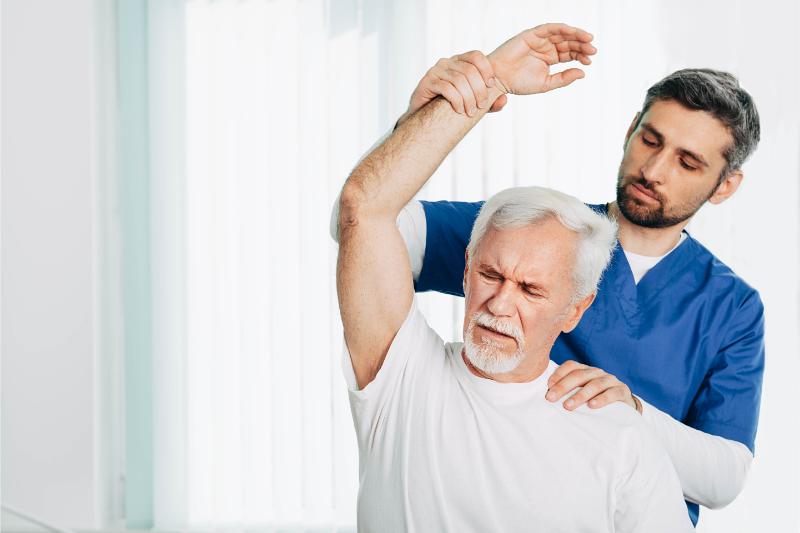
Physical Therapy After Shoulder Replacement
Shoulder replacement surgery (also known as shoulder arthroplasty) is a procedure to replace all or part of the shoulder joint with artificial components. It’s typically considered when severe shoulder damage or arthritis causes intense pain and loss of function that can’t be relieved by medication or therapy.
Although shoulder replacements are less common than knee or hip replacements, about 65,000 Americans undergo shoulder arthroplasty each year. The surgery can drastically reduce pain and improve mobility, and it has a high success rate – roughly 95% of patients are pain-free one year after surgery.
Physical therapy after shoulder replacement is critical to achieve these positive outcomes. A structured rehab program helps you regain strength, restore range of motion, and safely return to everyday activities. In this guide, we’ll explain what shoulder replacement involves, and how physical therapy (PT) before and after surgery supports a smooth recovery.
What Is Shoulder Replacement Surgery?

Shoulder replacement surgery is an elective orthopedic procedure in which damaged parts of the shoulder joint are removed and replaced with prosthetic (artificial) parts. It is usually recommended only when conservative treatments (like medications, injections, or prior therapy) have failed to manage shoulder pain or when the shoulder’s function is severely limited.
During a shoulder replacement (arthroplasty), the surgeon removes the damaged joint surfaces and installs a new prosthetic joint. Depending on the condition, your surgeon might perform one of several types of shoulder arthroplasty:
- Total Shoulder Replacement (TSA): Both the ball (the rounded head of your upper arm bone) and the socket (part of the shoulder blade) are replaced with artificial components. The ball is replaced with a metal ball-shaped implant, and the socket (glenoid) is replaced with a smooth plastic cup. This is the most common type for osteoarthritis and results in excellent pain relief in most cases.
- Partial Shoulder Replacement (Hemiarthroplasty): Only the ball of the humerus is replaced with a metal implant, while the natural socket is left intact. This may be done if the socket is healthy or in certain fracture cases.
- Reverse Shoulder Replacement: The normal ball-and-socket orientation is “reversed.” A metal ball component is attached to the shoulder blade, and a socket component is attached to the top of the arm bone. This design allows the deltoid muscle to lift the arm instead of the torn rotator cuff. Reverse replacements are typically used when the rotator cuff tendons are badly damaged or absent, since it lets the deltoid compensate for a deficient rotator cuff.
No matter the type of shoulder replacement, post-surgical rehabilitation is crucial. Replacing the joint is only the first step; you must retrain your shoulder to move and function with the new joint. This is where physical therapy comes in, guiding you through exercises and precautions so you heal correctly and regain as much strength and mobility as possible.
How Physical Therapy Helps After Shoulder Replacement
Physical therapy is vital for a safe and healthy recovery after shoulder replacement surgery. While the surgeon’s work fixes or replaces the joint internally, the physical therapist’s role is to help you restore motion, strength, and function in the weeks and months following the operation.
After surgery, your shoulder will initially be stiff, which may feel like a frozen shoulder, also it will be weak, and protected in a sling. A physical therapist will guide you step by step – beginning with gentle movements and progressing to strengthening exercises – to ensure you regain use of your arm without injuring the healing tissues.
Key goals of physical therapy after shoulder replacement include:
- Pain Relief and Swelling Control: Therapists use techniques like ice, gentle manual therapy, and specific exercises to reduce pain and inflammation. Proper pain management is important because when pain is under control, you can start moving the shoulder sooner and more comfortably, which aids recovery.
- Restoring Range of Motion: One of the primary objectives is to prevent stiffness. Your therapist will initially assist with gentle range-of-motion (ROM) exercises – often passive movements where the therapist moves your arm for you, or active-assisted exercises where you use your non-surgical arm or a tool (like a pulley or cane) to help move the operated arm.
- Rebuilding Strength: As healing progresses, your physical therapist will introduce exercises with resistance bands or light weights to gently strengthen the shoulder muscles without over-stressing the joint.
- Improving Function and Mobility: Beyond just moving the joint, physical therapy focuses on helping you return to daily activities. Your therapist will train you in functional movements – for example, reaching into a cabinet, getting dressed, or lifting a light object – in a safe manner as your recovery allows.
- Guidance and Education: Importantly, your physical therapist provides education on activity modifications and precautions. They’ll teach you what to do and what not to do at each stage of recovery – for instance, how to put on a shirt without stressing your shoulder, or how to lie down and get up safely.
Overall, physical therapy is a partnership between you and the therapist. By following their guidance – doing your home exercises, respecting movement restrictions, and attending therapy sessions – you give yourself the best chance at a strong recovery. Next, we’ll break down what to expect from physical therapy before surgery, immediately after surgery, and in the weeks of rehabilitation that follow.
Physical Therapy Before and After Shoulder Replacement Surgery
Before Surgery (Prehabilitation)
Not everyone has the opportunity to do pre-surgery physical therapy, but if you do, it can be very beneficial. Working with a physical therapist before shoulder replacement (sometimes called “prehab”) helps prepare your body for the upcoming procedure and can lead to a smoother recovery.
In the weeks leading up to surgery, a therapist can develop a personalized exercise program to improve your shoulder’s condition. This typically includes gentle strengthening exercises for the shoulder and upper back muscles, as well as stretching and posture training. The stronger and more flexible your shoulder is before surgery, the better its potential to recover afterwards.
After Surgery (Hospital Stay & Early Recovery)
After your shoulder replacement surgery, you will typically spend a short period in the hospital for initial recovery. Most patients stay 1 to 3 days in the hospital, depending on their health and the specifics of the surgery. During this time, your arm will be immobilized in a shoulder sling to protect the joint.
Surgeons usually recommend wearing the sling full-time for anywhere from about 3 to 6 weeks (or up to 8 weeks in some cases), during which you should not actively move your shoulder without guidance. This period allows the repaired tissues (or the prosthetic components and surrounding muscles) to begin healing in a stable position.
Physical therapy typically begins within the first day or two after surgery, even while you’re in the hospital. A hospital physical therapist or occupational therapist will help you start with very basic activities and exercises. Early therapy in this phase focuses on protecting the shoulder and maintaining safety. You will be shown how to get in and out of bed or a chair without injuring your shoulder, how to take off and put on your sling properly, and how to get dressed using your good arm while keeping the operated shoulder safe. Your therapist will also review movements to avoid.
As You Recover (Outpatient Rehabilitation & Beyond)
Once you’re discharged from the hospital, continuing physical therapy is essential for a full recoverychoosept.com. You will either receive home-based PT or, more commonly, start visiting an outpatient physical therapy clinic a few times per week. Your surgeon and physical therapist will coordinate on your rehab plan, tailoring it to your surgery type and progress. Typically, the first follow-up with your surgeon occurs a week or two post-op, and they will check your incision and give the go-ahead for more active rehab when appropriate.
In the first 4-6 weeks after surgery, the focus of outpatient PT remains on gentle range of motion and protecting the healing structures. Precautions are still in place (no active lifting of the arm, no reaching behind back, etc., as noted earlier). During therapy sessions, your PT will perform passive stretching and guided movements to gradually improve your shoulder’s mobility.
By around 6-8 weeks after surgery, if everything is healing well, you will typically be allowed to come out of the sling and start using the arm more actively. At this point, your physical therapist will introduce more active range of motion exercises – meaning you begin to lift the arm using its own muscle power (still within a limited range and without weight). As you regain strength and control over the shoulder, therapy will progress to the strengthening phase. From about 8-12 weeks onward, you’ll start gentle strengthening exercises targeting the shoulder and surrounding muscles.
As you advance to 3-4+ months after surgery, your shoulder should be gaining more strength and flexibility. Many patients at this stage can perform more demanding daily tasks – for example, reaching a shelf at shoulder height, carrying a bag of groceries, or light yard work – with much less pain or difficulty than before surgery.
Keep in mind, everyone’s recovery timeline is a little different. Factors like your age, overall health, the type of shoulder replacement (anatomic vs. reverse), and your adherence to therapy all influence how quickly you progress.
Preventing Surgery: Can Shoulder Replacement Be Avoided?
Because shoulder replacement is usually an elective (non-emergency) surgery, a common question is whether it can be prevented or delayed through other means. In some cases, the answer is yes – especially if you seek treatment early for shoulder problems. A physical therapist can often help you manage shoulder pain and restore enough function that you may postpone or avoid surgery, at least for a time.
Prevention and management strategies include: maintaining good posture (poor posture can exacerbate shoulder joint strain), doing regular range-of-motion and strengthening exercises to keep the shoulder joint stable, and avoiding excessive overhead activities that cause pain. A physical therapist can tailor a program to your specific issues and teach you how to protect your shoulder joint during your activities.
Of course, not every condition can be prevented – if the joint damage is severe (bone-on-bone arthritis or massive irreparable tendon tears), surgery might eventually be the only way to significantly improve your quality of life. However, even in those cases, staying as active and strong as possible beforehand will help. General healthy lifestyle choices also contribute: regular physical activity and a balanced diet support your joint health, and not smoking is important.
Choosing the Right Physical Therapist for Shoulder Rehabilitation
All licensed physical therapists have the basic training to guide patients through orthopedic surgeries like shoulder replacements. However, you may want to seek out a PT who has specific experience in shoulder rehabilitation or orthopedics for the best results. When beginning your post-surgery therapy (or even pre-surgery planning), consider the following tips to choose the right provider:
- Experience and Specialization: Look for a therapist or clinic that frequently works with musculoskeletal and orthopedic conditions – this might be an outpatient clinic specializing in orthopedics or sports injuries. Some therapists have additional credentials, such as being board-certified orthopedic specialists (OCS) or sports specialists (SCS), or they may have completed advanced training in shoulder rehab. These qualifications indicate a deeper level of expertise in treating complex shoulder issues. Therapists with geriatric specialty training can also be beneficial, especially for older adults.
- Recommendations: Ask your orthopedic surgeon if they have preferred physical therapists they work with. Often, surgeons partner with trusted PTs and can refer you to someone skilled in post–shoulder replacement rehab. You can also get recommendations from friends or family who have had orthopedic therapy, or even read reviews if available.
- Questions to Ask: When you contact a therapy clinic, don’t hesitate to ask, “Does the physical therapist have experience treating patients after shoulder replacement surgery?”. Inquire about how they approach treatment in the early phases, and how they progress patients back to full activity. A good PT will be able to outline a rough plan and reassure you about their familiarity with your type of surgery.
- Convenience and Communication: You’ll be seeing your therapist frequently (perhaps 2-3 times per week initially), so choose a clinic that is convenient for you to visit regularly. Also, ensure the therapist is someone you feel comfortable with and who communicates clearly. Rehabilitation is a team effort – you should feel heard and involved in your care.
At La Clinica SC Injury Specialists, our physical therapy team is highly experienced in post-operative shoulder rehabilitation. We take a clinical yet approachable approach – meaning we use evidence-based techniques and close communication with your orthopedic surgeon, while also providing compassionate, one-on-one guidance throughout your recovery. Our clinic brings together physical therapists, orthopedic specialists, and pain management experts under one roof, so you receive well-coordinated care at each step of your shoulder replacement journey.
Conclusion
In summary, a shoulder replacement can be a life-changing surgery that frees you from pain and restores your shoulder function – but the importance of physical therapy in this process cannot be overstated. From preparing you before the operation, to guiding you through exercises in the hospital, and then working with you for months during recovery, physical therapy ensures that your new shoulder heals strong and moves well.
By staying committed to your rehab program and working closely with your therapist, you’ll maximize the benefits of your shoulder replacement and be on your way to a healthier, more active life with your “new” shoulder. If you or a loved one are considering shoulder replacement or are in recovery now, know that the team at La Clinica SC is here to help you every step of the way. Your successful recovery is our priority – let’s get you back to pain-free living with the power of rehabilitation!


 English
  Spanish