

Latest Advances in Spine Rehab Therapy
Conditions that harm the spinal cord, along with continuous back pain, severely restrict movement while continuing to produce long-term pain symptoms. The field of spine rehab therapy now utilizes modern advanced techniques that boost recovery speed while providing better long-term results to patients. The modern medical rehabilitation world delivers customized treatments to match the different needs of patients who experience injuries through accidents, work conditions, or medical issues.
Revolutionary Techniques Transforming Spine Rehabilitation
Old traditional methods in spine rehab practice have experienced significant progress. Today, patients benefit from a combination of innovative therapies and technology-driven approaches that focus on reducing pain, enhancing mobility, and preventing future complications.
1. Regenerative Medicine for Spinal Healing
One of the most exciting breakthroughs in spine rehab therapy is the use of regenerative medicine. This includes treatments such as:
- The use of Platelet-Rich Plasma (PRP) represents an injection method that applies blood platelets from patients to accelerate spinal tissue recovery.
- The healing potential of spinal discs through stem cell treatment originates from elements taken from bone marrow and adipose tissue.
The healing cycle of the human body finds increased speed and decreased inflammation through these treatment options, which thus provides treatment possibilities to degenerative spine condition sufferers.
2. AI and Robotics in Physical Therapy
AI and robotic-assisted rehabilitation are transforming spine therapy by improving diagnostics, enhancing mobility, and personalizing treatment.
AI-Driven Diagnostics
AI-powered tools analyze movement patterns, detect irregularities, and provide data-driven recommendations. Motion-capture technology helps therapists fine-tune exercises for better posture and muscle engagement, while AI-assisted pain assessment ensures more targeted treatments.
Robotic Exoskeletons for Mobility
Robotic exoskeletons support movement, helping patients with spinal injuries regain mobility. These devices adjust assistance levels based on muscle activity, promoting gradual recovery and independence.
Real-Time Feedback for Better Results
AI and robotics provide instant feedback, ensuring exercises are performed correctly and safely. Therapists can adjust treatment plans dynamically, maximizing effectiveness and minimizing setbacks.
3. Virtual Reality (VR) for Pain Management and Rehabilitation
VR is making spine rehab more engaging by combining pain relief with functional movement training.
Pain Distraction and Psychological Benefits
VR environments help distract patients from pain, making therapy more comfortable and effective. Engaging in virtual activities reduces perceived pain and improves session adherence.
Improving Motor Function and Coordination
Interactive VR exercises strengthen core muscles and enhance coordination. Motion tracking ensures correct movement, making therapy more precise and beneficial.
Personalized Therapy Experiences
VR rehab adapts to individual needs, gradually increasing difficulty based on progress. Real-time data tracking keeps patients motivated and allows therapists to fine-tune treatments for optimal results.
4. Personalized Physical Therapy Programs
Gone are the days of one-size-fits-all therapy plans. Physical therapists now design rehab programs tailored to each patient’s specific condition and lifestyle. Some advancements include:
- Functional Movement Screening (FMS): Identifies movement imbalances to create targeted rehab exercises.
- Biomechanical Analysis: Uses motion sensors to track posture and spinal alignment, ensuring exercises are performed correctly.
- Work Conditioning Programs: Designed for individuals recovering from work-related injuries, these programs simulate real-life job activities to ensure a safe return to work.
Non-Invasive Pain Relief Strategies
Most individuals with spinal pain place high importance on avoiding surgical interventions. Modern rehabilitation methods provide patients with effective non-invasive approaches that help them control pain and function better. These healing approaches enable patients to heal quickly at the same time they reduce the intensity of their discomfort.
Shockwave Therapy
Medical practitioners employ shockwave therapy because it works through ultrasonic waves that enhance tissue repair in spinal muscle structures as well as tendons and ligaments. The therapy improves body healing through decreased scar tissue breakdown combined with increased blood circulation to produce quicker natural recovery. Shockwave therapy works best on patients who suffer from long-term back problems, disc damage, or soft tissue strains because it reduces inflammation and brings back full movement capabilities through non-drug, non-surgical therapy.
Neuromuscular Electrical Stimulation (NMES)
Through low-level electrical signals, NMES facilitates muscle contractions in spinal cord injury regions and nerves where damage exists. The therapy stops muscle weakness development while improving bloodstream function and enhancing essential neuromuscular coordination necessary during rehabilitation. Those who develop muscle weakness from extended immobilization periods can derive substantial advantages because NMES offers muscle training to develop strength back again. Medical rehabilitation programs combine NMES technology with physical exercises as an optimal approach to achieve better patient results.
Dry Needling for Muscle Tension
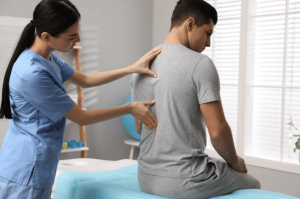
Through its focused technique, dry needling treats trigger points, which are small muscle knots, to alleviate tension while enhancing mobility. Western medical principles drive dry needling, unlike acupuncture, since it addresses the treatment of musculoskeletal pain, specifically employing dry needling techniques. The use of thin needles that therapists insert into tense muscle fibers grants them the ability to dissolve tension while decreasing inflammation and enhancing blood flow. Dry needling creates beneficial effects for back pain patients by delivering noticeable therapeutic benefits that work as part of comprehensive spine rehabilitation approaches.
The Role of Chiropractic Care in Spine Rehabilitation
Chiropractic care remains a cornerstone of spine rehab, with modern techniques enhancing its effectiveness. Spinal adjustments, combined with soft tissue therapy and corrective exercises, help patients restore alignment and reduce nerve pressure. Some advanced chiropractic approaches include:
- Flexion-Distraction Therapy: A gentle, decompressive technique for herniated discs and spinal stenosis.
- Instrument-Assisted Adjustments: Utilize precision tools to perform spinal corrections with minimal force.
- Active Release Techniques (ART): Focuses on breaking up scar tissue and adhesions that may restrict movement.
Spine Rehab and Lifestyle Modifications
While advanced therapies accelerate recovery, long-term spinal health depends on maintaining an active lifestyle. Some essential practices for preventing recurring back issues include:
8. Ergonomic Adjustments at Work and Home
Posture plays a significant role in spine health. Adjusting workstation setups, using supportive seating, and practicing proper lifting techniques reduce strain on the spine and lower the risk of injury.
9. Core Strengthening and Mobility Exercises
Strong core muscles provide essential support to the spine. Patients are often encouraged to incorporate low-impact activities such as:
- Yoga and Pilates: Improve flexibility, posture, and spinal stability.
- Swimming: Offers resistance-based strengthening with minimal joint impact.
- Foam rolling: Helps release muscle tightness and enhances blood flow to the spine.
Seeking Professional Spine Rehab Care in Chicago
People suffering from spinal pain alongside those recovering from injuries should consider professional rehab services for making critical improvements in their condition. La Clinica SC features expert professionals who provide full spine rehabilitation services at multiple locations throughout Chicago.
Our team understands that each patient recovers in their distinctive way; thus, we provide these services:
- Advanced diagnostic testing
- Physical therapy tailored to your specific condition
- Chiropractic adjustments for spinal alignment
- Work conditioning programs for a safe return to employment
- Telehealth options for convenient care
Ready to Take the Next Step?
Regain your mobility and live pain-free with expert spine rehab therapy. Schedule a consultation with La Clinica SC today and get personalized treatment to help you recover faster.
Spinal health is essential for overall well-being. With today’s advanced rehab therapies, recovery is more efficient and effective than ever. Don’t let back pain hold you back—get the expert care you deserve!


 English
  Spanish