
Fisioterapia para lesiones laborales: Recuperación de las lesiones más comunes en el lugar de trabajo
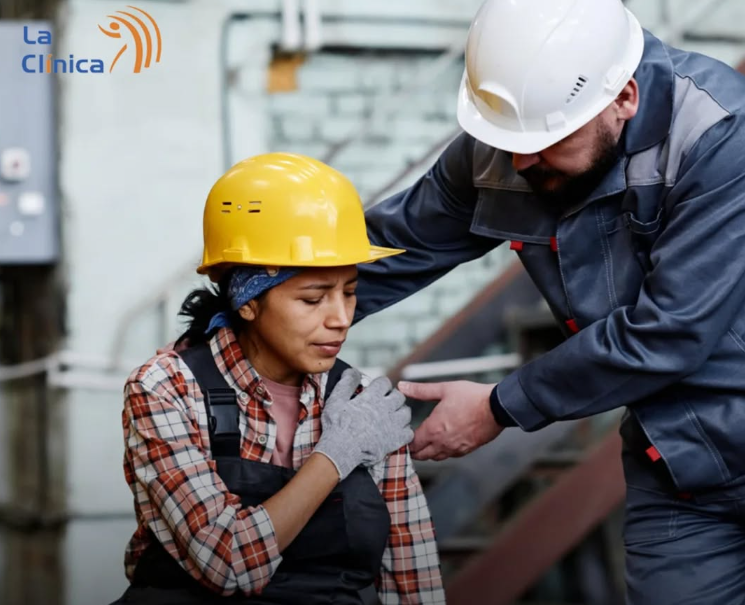
Common Workplace Injuries and How to Treat Them
Sometimes, an unexpected event happens. Whether you are in a bustling Chicago warehouse, a busy medical office, or a high-rise construction site, the risk of a work-related injury is a reality that many employees face. When an accident happens, the path to recovery can feel overwhelming. You are not just dealing with physical pain; you are managing insurance claims, lost wages, and the uncertainty of when you can return to your normal life.
En La Clínica, we specialize in work injury PT (physical therapy) and rehabilitation. Over the years, what we’ve noticed is that a “quick fix” isn’t enough—you would need a comprehensive plan to get back to full strength.
We’ve prepared this article where we’d like to break down the most frequent workplace injuries, the latest statistics on job safety, and how specialized physical therapy can accelerate your recovery.
Workplace Injuries by the Numbers: A Quick Look at the Statistics
Understanding the landscape of workplace safety helps put your own experience into perspective. Recent data from the Bureau of Labor Statistics (BLS) and the National Safety Council highlights just how common these incidents are:
-
The Scale: In 2024, private industry employers reported approximately 2.5 million nonfatal workplace injuries and illnesses.
-
The Time Lost: The median number of days away from work (DAFW) for a reported injury is 8 days, but for serious cases like overexertion or falls, that number jumps to over 20 days
The Leading Causes:
-
-
Sprains, Strains, and Tears: Over 568,000 cases annually.
-
Back Injuries: Aproximadamente 248,000 cases, making the back the most frequently injured body part.
-
Falls, Slips, and Trips: Nearly 480,000 cases per year.
-
The Success of Early Intervention.
Studies show that when injured workers receive same-day access to physical therapy, up to 94% are able to return to some form of work activity within 24 to 48 hours.
5 Common Workplace Injuries and How to Treat Them
From what we know, every job has its unique hazards, but most injuries fall into a few specific categories. Here is how they happen and how work injury PT can help.
1. Overexertion and Musculoskeletal Strains
This is the “heavy lifting” injury. It happens when you push, pull, lift, or carry objects that exceed your physical limits. It’s the #1 cause of lost workdays.

» What is the treatment?
Physical therapy focuses on “active care.” Instead of just resting, we use targeted exercises to strengthen the core and the specific muscle groups used in your job. We also provide body mechanics training to teach you how to lift safely in the future.
2. Slips, Trips, and Falls
Whether it’s a wet floor in a restaurant or a cluttered walkway in a factory, falls can lead to everything from sprained ankles to concussions and fractured wrists.

» What is the treatment?
Recovery often involves vestibular rehabilitation (for balance) and progressive weight-bearing exercises. Our goal at La Clinica SC is to restore your stability so you feel confident moving on uneven surfaces again.
3. Repetitive Stress Injuries (RSI)
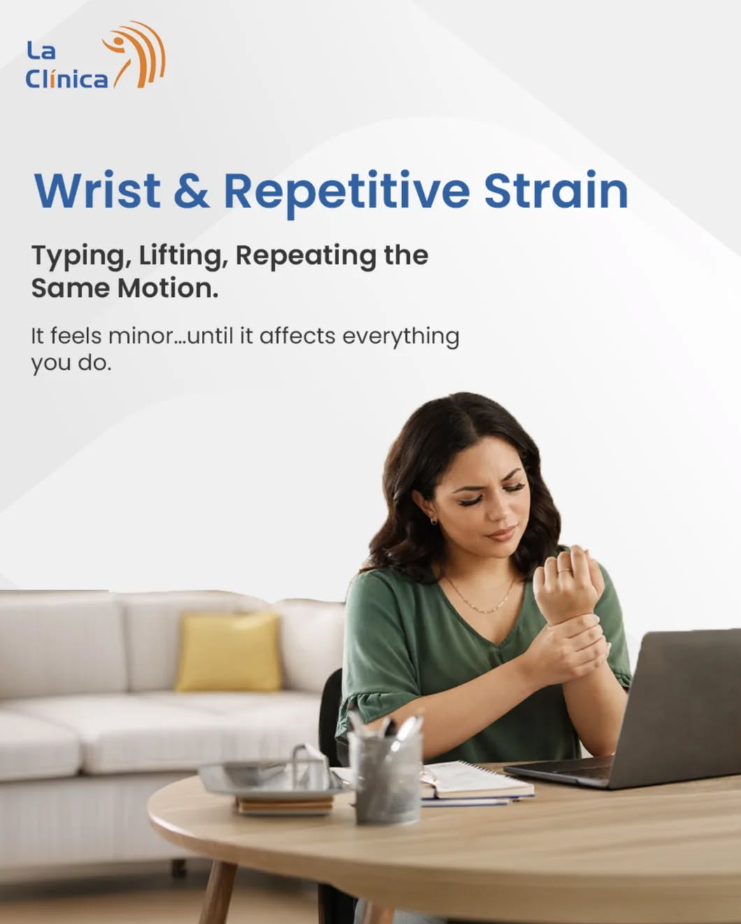
Not all injuries happen in a split second. RSIs, like Carpal Tunnel Syndrome or Tendonitis, develop over months of performing the same motion—like typing, assembly line work, or scanning groceries. RSIs consistently account for roughly 31% of all nonfatal workplace injuries.
Phase 1: Immediate Relief (The "Calm Down" Phase)
Treating Repetitive Stress Injury (RSI) is rarely a “quick fix.” Because these injuries are cumulative, the most effective treatment plans in 2026 focus on a tiered approach: immediate relief, long-term rehabilitation, and environmental modification.
The goal here is to reduce acute inflammation and pain.
-
The R.I.C.E. Method: Rest, Ice, Compression, and Elevation remain the gold standard for flare-ups.
-
Activity Modification: This is the most critical (and hardest) step. You must stop or significantly reduce the specific motion causing the pain to prevent further tissue damage.
-
Anti-Inflammatory Medication: Over-the-counter NSAIDs (like Ibuprofen or Naproxen) are used to manage swelling. Note: Experts warn not to use these just to “mask” pain so you can keep working, as this leads to more severe injury.
-
Splinting/Bracing: Especially for Carpal Tunnel, wearing a wrist splint at night is highly effective. It prevents you from curling your wrists while sleeping, which reduces pressure on the median nerve.
Phase 2: Rehabilitation (The "Heal & Strengthen" Phase)
Once the sharp pain subsides, the focus shifts to restoring function.
-
Physical & Occupational Therapy: This is the cornerstone of RSI treatment. Therapists use:
-
Neural Gliding: Exercises that gently stretch and “slide” nerves through their pathways.
-
Eccentric Strengthening: Slow, controlled muscle movements to rebuild tendon strength.
-
Liberación miofascial: Specialized massage to break up scar tissue or “adhesions.”
-
-
The M.E.A.T. Method: A modern alternative to RICE that some clinicians prefer for chronic cases: Movement, Exercise, Unanalgesics, and Treatment. It focuses on gentle blood flow rather than total immobilization.
-
Ergonomic Overhaul: You cannot heal an RSI if you return to the same environment that caused it. This includes adjusting chair height, using vertical mice, or switching to split keyboards.
Phase 3: Advanced Interventions
If conservative treatments fail after 3–6 months, doctors may suggest:
-
Corticosteroid Injections: These provide potent, localized anti-inflammatory relief. They are often a “last resort” before surgery and are usually limited to 2–3 per year.
-
Regenerative Biologics: 2026 has seen a rise in treatments like PRP (Platelet-Rich Plasma) for chronic tendonitis, though effectiveness varies by individual.
-
Extracorporeal Shockwave Therapy (ESWT): Using sound waves to stimulate healing in stubborn tendon injuries like Tennis Elbow.
Phase 4: Surgical Options
Surgery is only recommended in about 5% of RSI cases, typically when there is a risk of permanent nerve damage or a complete tendon tear.
-
Carpal Tunnel Release: A very common, often minimally invasive procedure to snip the ligament pressing on the nerve.
-
Tenolysis: Surgery to “clean out” or release a tendon that is trapped by its sheath (common in Trigger Finger).
» What is the treatment?
We utilize ergonomic assessments to change how you interact with your workspace. Treatment includes manual therapy to reduce inflammation and specific stretching routines to relieve nerve compression.
4. Accidents
Common in construction and manufacturing, the injuries occur when a worker is hit by a falling object or caught in heavy machinery. These are often high-severity injuries.
» What is the treatment?
These cases often require a long-term Rehabilitación Industrial approach. This includes Acondicionamiento de trabajo, which mimics your specific job tasks (like climbing a ladder or using a power tool) in a controlled environment to ensure you are physically ready for the “real world.”
5. Transportation and Vehicle Accidents
For those who drive for a living—delivery drivers, truck drivers, or traveling sales reps—auto accidents are a major risk. Whiplash and chronic back pain are common after-effects.
» What is the treatment?
We use physical therapy to realign the spine and reduce soft tissue pain, helping you return to the driver’s seat safely.
"Driver's Risk": Common Injuries
Professional drivers face unique physical challenges because they often sit in a fixed position for hours before an impact occurs. Common injuries include:
-
Whiplash (Cervical Strain): When your vehicle is struck, your head snaps forward and back. This overstretches the ligaments and muscles in the neck.
-
Lumbar (Lower Back) Strains: The lower back often absorbs the force transmitted through the driver’s seat.
-
Herniated Discs: The sudden “jarring” of a collision can cause spinal discs to bulge or tear, leading to radiating pain, numbness, or “sciatica” down the legs.
-
Hidden Injuries: Adrenaline often masks pain immediately after a crash. It is common for drivers to feel “fine” at the scene, only to be unable to move the next morning once inflammation sets in.
The Treatment Plan: Getting Back to the Driver's Seat
How does a recovery looks liek for a professional driver?
The PT recovery for professional drivers isn’t about stopping the pain; it’s about restoring the functional capacity required to operate a heavy vehicle safely.
1. (Critical!) Same-Day Evaluation
Early intervention is critical. Clinics like La Clínica SC emphasize same-day appointments to assess “hidden” soft tissue damage before scar tissue begins to limit your range of motion.
2. Manual Therapy & Realignment
Physical therapists use hands-on techniques to:
-
Mobilize Joints: Gently moving the vertebrae to reduce stiffness.
-
Liberación miofascial: Breaking up “knots” and tension in the neck and shoulder muscles.
-
Spinal Decompression: Techniques to relieve pressure on pinched nerves.
3. Core & Postural Strengthening
Driving requires “static endurance.” Therapy focuses on strengthening the core and upper back so your spine can handle the vibrations and long hours of sitting without re-injury.
4. Work Conditioning
For truck and delivery drivers, treatment often includes Acondicionamiento de trabajo—exercises that mimic your job, such as climbing into a cab, checking blind spots (neck rotation), and handling cargo.
Why Choose La Clinica S.C. for Your Work-Related Injury PT?
Recovering from a work injury requires more than just a standard exercise plan. At La Clinica, we offer a specialized Rehabilitation Program designed specifically for the Illinois workforce.
Patients Often Ask Us About Sample Treatment Pathways at La Clinica:
The First Step is the Initial Assessment: we look at your Functional Capacity (an individual’s maximum physical and mental ability to perform tasks). We evaluate your range of motion, strength, and the specific physical demands of your job.
-
Work Conditioning: This is a “bridge” program. If your job requires you to lift 50 lbs, we don’t just clear you for work when you can lift 10 lbs. We use job simulation to get you back to that 50-lb threshold safely.
-
FCE (Functional Capacity Evaluations): We provide objective, research-based testing to determine exactly when you can safely return to full duty, protecting you from re-injury.
-
Bilingual Support & Transit: We know that getting to appointments can be a hurdle. That’s why we offer as-needed transportation to our clinics and have a staff that speaks your language.
Prevention: How to Stay Safe on the Clock
While we are experts at treating injuries, our ultimate goal is to help you avoid them. Here are three quick tips to implement today:
-
The 20-20-20 Rule: If you work at a desk, every 20 minutes, look at something 20 feet away for 20 seconds, and stand up to stretch.
-
Use the “Power Zone”: When lifting, keep the object between your mid-thigh and mid-chest height. This is your strongest range and puts the least stress on your spine.
-
Report “Near Misses”: If you almost tripped or almost dropped something, tell your supervisor. Fixing a hazard antes an accident happens is the best way to stay healthy.
Take the First Step Toward Recovery
If you’ve been hurt on the job, don’t wait for the pain to become chronic. Based on the Workers Compensation Handbook, the law in Illinois protects your right (Click here to view a Workers Compensation Handbook) to choose your own medical provider, regardless of your immigration status or the “company doctor’s” opinion.
(B) Subsequent to the report of an injury by an employee, the employee may choose in writing at any time
to decline the preferred provider program, in which case that would constitute one of the two choices of
medical providers to which the employee is entitled under subsection (a)(2) or (a)(3)…Leer másPortions of Illinois Workers’ Compensation Act
Related to Medical Care
805 ILCS 305
CONCLUSION: Remember, no pre-approval is required to get treated with us. We encourage you to contact La Clínica today to make an appointment!
.
Sources:
- U.S. Bureau of Labor Statistics – https://www.bls.gov/iif/
- ILLINOIS WORKERS’ COMPENSATION COMMISSION – https://iwcc.illinois.gov/content/dam/soi/en/web/iwcc/about/handbook/documents/handbook.pdf
- Portions of the Illinois Workers’ Compensation Act. Related to Medical Care 805 ILCS 305. -https://iwcc.illinois.gov/content/dam/soi/en/web/iwcc/documents/fslaw.pdf
- Concentra – https://www.concentra.com/resource-center/articles/wcirb-studies-support-concentras-early-intervention-model-of-care/
- National Safety Council – https://injuryfacts.nsc.org/
 Spanish
  English