
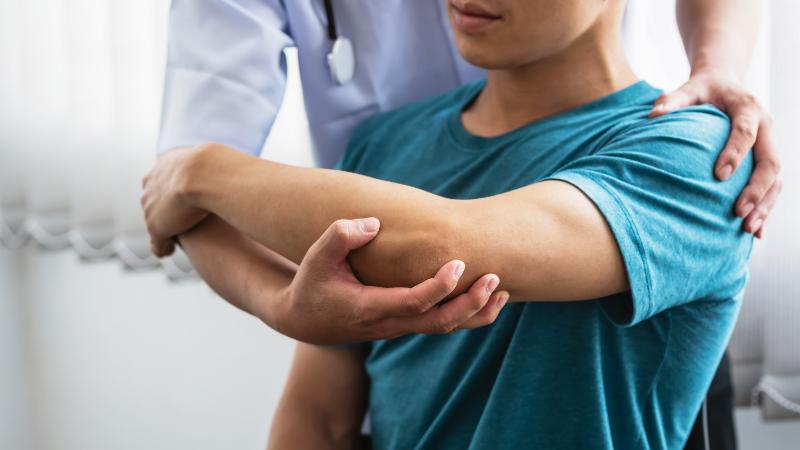
Physical Therapy for Elbow Injuries: 7 Simple Exercises to Speed Your Recovery
Many people don’t think about their elbows—until an injury makes every movement hurt. Suddenly, everyday tasks like lifting a coffee mug or opening a door become challenging due to pain, swelling, or stiffness. The elbow is a crucial joint that lets us perform countless activities, from swinging a tennis racket or lifting a heavy box at work to bracing during a fall or auto accident.
When an elbow injury strikes, it can disrupt your life and limit your independence. The good news is that most elbow injuries heal well with proper care, and physical therapy is often the key to restoring your strength and mobility without surgery.
In this guide, we’ll explain how physical therapy can help an injured elbow heal. We’ll also cover common elbow injury symptoms, why physical therapy for elbow injuries is so effective, and 7 simple exercises therapists often recommend. These exercises are easy to do at home and can help relieve pain and improve your elbow’s function.
Are You Experiencing These Elbow Injury Symptoms?
How do you know if your elbow is injured beyond a minor bump or bruise? Here are some common signs and symptoms of an elbow injury to watch for:
- Elbow Pain: This can range from a dull ache to sharp pain, and might localize to the inner side or outer side of your elbow.
- Stiffness or Limited Movement: You may find it hard to fully bend or straighten your elbow. Simple motions like reaching out to grab something or bending your arm to touch your shoulder can feel tight or limited.
- Swelling and Tenderness: An injured elbow might swell up or feel tender to the touch. Swelling can make the joint feel tight and can reduce your range of motion.
- Weak Grip or Difficulty Lifting: Because many forearm muscles that control your grip attach at the elbow, you might notice weakness in your hand or forearm. Tasks like shaking hands, lifting a bag, or even making a fist could be difficult or painful.
- Tingling or Numbness: If you have nerve involvement (such as with severe swelling or conditions like cubital tunnel syndrome), you might feel numbness or tingling radiating down your forearm into your ring and little fingers.
- Pain with Certain Movements: Often elbow injuries cause arm pain during specific actions – for example, turning a doorknob or screwdriver, throwing a ball, or lifting something with your arm extended. You might also feel pain when you twist your forearm (like turning your palm up and down) or when you grip objects tightly.
If you notice a few of these symptoms – especially if they persist or worsen over time – you likely have an elbow injury that would benefit from medical attention.
Have questions about your elbow injury or pain?
Book an appointment with La Clinica SC to get a proper evaluation from our elbow injury specialists. We can assess your condition and create a personalized plan – including physical therapy – to help you heal and get back to work, sports, and daily life.
Why Physical Therapy Can Help
Elbow injuries are extremely common. Musculoskeletal issues (like joint and tendon injuries) account for roughly 10–15% of all doctor visits. Because we use our arms for almost everything, any elbow problem can have a big impact on daily life. Physical therapy (PT) is one of the most effective treatments for elbow injuries because it directly addresses the root issues – stiffness, weakness, and inflammation – in a safe, controlled way. Physical therapy helps by:
- Reducing Pain and Inflammation: Therapists use techniques like gentle motion, ice/heat therapy, ultrasound, or manual massage to ease pain and swelling. By improving circulation to the injured tissues, PT can promote faster healing and pain relief.
- Restoring Mobility: An injured elbow often becomes stiff or loses range of motion. Stretching and range-of-motion exercises guided by a therapist help you gradually regain the ability to fully bend and straighten your elbow.
- Improving Strength: After an injury (or after wearing a cast/sling), the muscles around your elbow can weaken. Strengthening exercises are a core part of physical therapy.
- Increasing Flexibility: Besides strength, your muscles and tendons need to be flexible. Physical therapy includes stretching to improve the flexibility of the muscles in your forearm and upper arm.
- Restoring Function for Daily Activities: PT exercises train the elbow (and related joints like the wrist and shoulder) to handle real-life activities again. This functional approach ensures you can safely get back to work tasks, sports, or hobbies.
- Preventing Future Injuries: Your therapist doesn’t just help you heal the current injury; they also educate you on how to avoid repeat problems.
Physical therapy is a cornerstone of elbow injury recovery. It can be customized to your unique situation, it actively involves you in your own healing, and it often speeds up recovery by improving how your elbow moves and functions. In the next section, we’ll go through some of the most common exercises physical therapists use to help patients with elbow injuries.
7 Common Physical Therapy Exercises for Elbow Injuries
When you visit a physical therapist for an elbow injury, they will guide you through exercises to regain your elbow’s range of motion and strength. Here are 7 simple exercises often recommended for elbow rehabilitation. These can usually be done at home with little or no equipment.
1. Elbow Bend (Flexion and Extension)
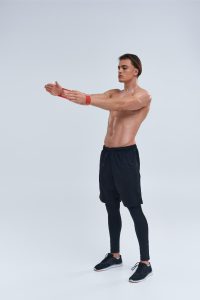
Purpose: Regain the ability to bend and straighten the elbow, and warm up the joint.
How to Do It: Stand or sit upright with your arm at your side. Gently bend your injured elbow, bringing your hand upward toward your shoulder as far as is comfortable (you can imagine doing a bicep curl motion, but initially don’t use any weight). When your hand reaches close to your shoulder, hold the bend for a moment and squeeze your bicep. Then slowly straighten your arm back down to the starting position.
Repetitions: Do about 10 repetitions in a slow, controlled manner. You can perform 2–3 sets if it feels okay, resting between sets. As you get stronger, your therapist might let you hold a very light weight (like 1–2 pounds) while doing this, but focus first on pain-free movement. Be sure to avoid an elbow hyperextension to prevent more damage to the elbow.
2. Wrist Turn (Forearm Supination/Pronation)
Purpose: Improve the rotation of your forearm (turning your palm up and down), which is important for actions like turning door knobs or using tools. This helps stretch and strengthen the muscles that rotate the forearm.
How to Do It: Bend your elbow at a 90° angle so that your forearm is extended in front of you, and keep your elbow tucked in at your side. Start with your palm facing up (as if you’re holding a bowl of soup in your hand). Now slowly rotate your forearm so your palm faces downwards. Turn only as far as is comfortable – you should feel a mild stretch. Hold the position for 3–5 seconds, then rotate your hand back up to palm-facing-up.
Repetitions: Repeat this motion 10–15 times. Each full rotation (palm-up to palm-down to palm-up) counts as one. You can do a couple of sets per session.
Passive Elbow Flexion (Assisted Bend)

Purpose: Gently increase the bending range of your elbow using assistance from your other hand. This is especially useful if your elbow is very stiff and you can’t bend it fully on its own.
How to Do It: Sit in a chair or at a table. Support your injured arm by resting the elbow on a folded towel or pillow on the table (for comfort). Use your opposite hand to hold the forearm of your injured arm. Now carefully assist your injured arm to bend, bringing the hand of your injured arm up toward the shoulder. Basically, you’re using your good arm to help bend the hurt elbow further than it can go by itself. Go slowly and stop when you feel a good stretch or any pain. Keep your wrist on the injured side relaxed and straight (don’t let it curl).
Repetitions: Try to hold the bent position for 15–30 seconds if you can, then gently release. Repeat this stretch about 5 times. Over days and weeks, you may be able to hold the stretch longer (up to 30–60 seconds) and bend a little more as your elbow loosens up.
Elbow Extension (Triceps Strengthening)

Purpose: Strengthen the triceps muscle and improve your ability to straighten the arm. After an elbow injury or time in a sling, people often struggle with fully straightening the arm, and the triceps may be weak.
How to Do It: You can do this exercise with or without a light weight. If using a weight, start very light (1–2 lb or a small can of soup). Option A (Seated/Standing): Hold your injured arm up so that your elbow is pointing toward the ceiling and your hand is behind your neck (imagine the position of scratching your upper back). Support your arm by placing your opposite hand on the elbow. Now straighten your injured arm upward, moving your hand toward the ceiling until your arm is extended (but don’t lock the elbow completely straight). You should feel your triceps (back of the upper arm) working. Then slowly bend the elbow again to return your hand behind your neck.
Option B (Lying Down): Lie on your back and hold your injured arm straight up toward the ceiling, elbow straight. Use a light weight if appropriate. Now bend the elbow so that you lower the weight toward your head (your elbow will point up, hand moves toward your forehead). Then press back up to straighten the arm. This is similar to a lying triceps press.
Repetitions: Aim for 8–10 repetitions, for 2–3 sets. The last couple of reps should feel tiring in the muscle (if you’re using weight), but should not cause sharp pain in the elbow.
5. Forearm Rotations with Resistance (Supination & Pronation Strengthening)
Purpose: Further strengthen the forearm muscles that turn your palm up (supinators) and palm down (pronators). This is a progression of the earlier wrist turn exercise, using resistance to build strength.
How to Do It: Rest your forearm on a table or the arm of a chair with your hand and wrist extended past the edge (so your wrist can rotate freely). Hold a light dumbbell or a hammer vertically in your hand (start with the weight pointing up, like a joystick). Your elbow should be bent about 90° and stay at your side. Now slowly rotate your forearm to turn the weight to one side (for example, rotate so your palm faces up and the hammer points outward), then rotate the other way (palm faces down, hammer points the opposite direction). Essentially, you are turning the weight from one side to the other in a controlled manner, using your forearm muscles.
Repetitions: Do 10 rotations to each side, for 2 sets. Each rotation should be slow – avoid letting the weight flop over; control the motion in both directions.
6. Towel Twist (Grip and Forearm Exercise)
Purpose: Strengthen the muscles in your forearm and wrist that assist with elbow stability, and improve your grip strength. This exercise simulates a common motion (wringing out a towel) which uses multiple muscle groups in the forearm.
How to Do It: Take a medium-sized towel (or therapy band) and roll it up loosely. Sit in a chair and hold the ends of the rolled towel with both hands, palms facing down. Now twist the towel as if you are wringing water out of it: one hand rotates forward and the other hand rotates backward, as far as you can comfortably go. You should feel the muscles in your forearms working.
Repetitions: Twist and hold for about 5 seconds in one direction, then rotate the opposite way and hold again. Repeat this 10 times each direction. You can do 2 sets.
7. Foam Ball Squeeze (Grip Strengthening)
Purpose: Improve your grip strength and endurance by strengthening the flexor muscles of your hand and forearm. A stronger grip can help take strain off the elbow joint during daily tasks. This exercise is often recommended for elbow tendonitis (like tennis elbow or golfer’s elbow) as part of rehab.
How to Do It: Get a soft foam ball or stress ball that fits comfortably in your hand. (A rolled-up sock can work in a pinch.) Hold the ball in your hand and squeeze it by making a fist. Squeeze as hard as you can without causing pain in your elbow or hand. Hold the squeeze for about 5 seconds, then release slowly.
Repetitions: Do 10–15 squeezes per session, and try to do this exercise a few times a day (e.g. morning, afternoon, and evening). If both your elbows or arms are injured, do this with one hand at a time. Otherwise, it’s great to exercise both sides – you can alternate hands.
Looking for expert elbow care in the Chicago area?
Contact La Clinica SC Injury Specialists today to book an appointment. Our orthopedic team and physical therapists will evaluate your elbow injury and guide you through a safe, effective rehabilitation program. We’re here to help you recover faster and get back to work, sports, and the activities you enjoy, with personalized care every step of the way.
Frequently Asked Questions About Elbow Injuries
Q: How do physical therapy exercises benefit an injured elbow?
A: Physical therapy exercises help an injured elbow by restoring mobility, reducing pain, and strengthening the surrounding muscles. When you gently stretch and strengthen the elbow and forearm, it improves blood flow to the area and promotes healing. Over time, therapy exercises can increase your elbow’s range of motion (so you can bend and straighten it more easily) and build up the muscles that support the joint. This not only helps the current injury heal but also makes the elbow more stable, potentially preventing future injuries.
Q: Are there specific exercises I should do for an injured elbow?
A: Yes. A physical therapist can show you targeted exercises based on your specific injury, but common ones include elbow bends, gentle extensions, wrist rotations, and grip exercises like squeezing a foam ball. For example, elbow bend/straightening exercises improve your joint flexibility, and wrist/forearm rotations (turning your palm up and down) help with forearm tendon injuries. Grip-strengthening moves (like the towel twist or ball squeeze) are often recommended too, because a stronger forearm can reduce strain on the elbow.
Q: What signs indicate that my injured elbow is healing?
A: Positive signs of healing include reduced pain (you notice the ache is less intense or less frequent than before) and improved range of motion. For instance, maybe last week you couldn’t bend your elbow past 90 degrees and now you can almost touch your shoulder. Increased strength is another good sign – you might find you can lift slightly heavier objects or grip things without pain. You may also observe less swelling and that you’re able to do more daily activities than before.
Q: Are there risks associated with physical therapy for an elbow injury?
A: Physical therapy is very safe when performed under the guidance of a trained professional. Therapists are skilled in making sure exercises are appropriate for your condition and stage of healing. However, if exercises are done with the wrong technique or too aggressively, there’s a risk of aggravating your injury. For example, doing too many repetitions too soon or stretching the elbow forcefully beyond its limit could cause pain. That’s why it’s important to follow the instructions from your therapist closely. Minor muscle soreness after exercise is normal, but you should not feel sharp pain during therapy exercises – if you do, stop and inform your therapist.
Q: How long does it take to recover from an elbow injury with therapy?
A: Recovery time can vary widely depending on the type and severity of the elbow injury. For a mild strain or tendinitis (like a mild tennis elbow), you might start feeling significantly better in a few weeks of consistent therapy. More moderate injuries, like a ligament sprain or a partial tendon tear, may take 6–8 weeks or more to heal, with steady improvement along the way. If you had elbow surgery or a complex fracture, recovery could span several months, including time for tissues to heal and for you to rebuild strength.


 English
  Spanish